EN VITRINE DE MAI | Comment la pratique architecturale aborde les crises environnementales?
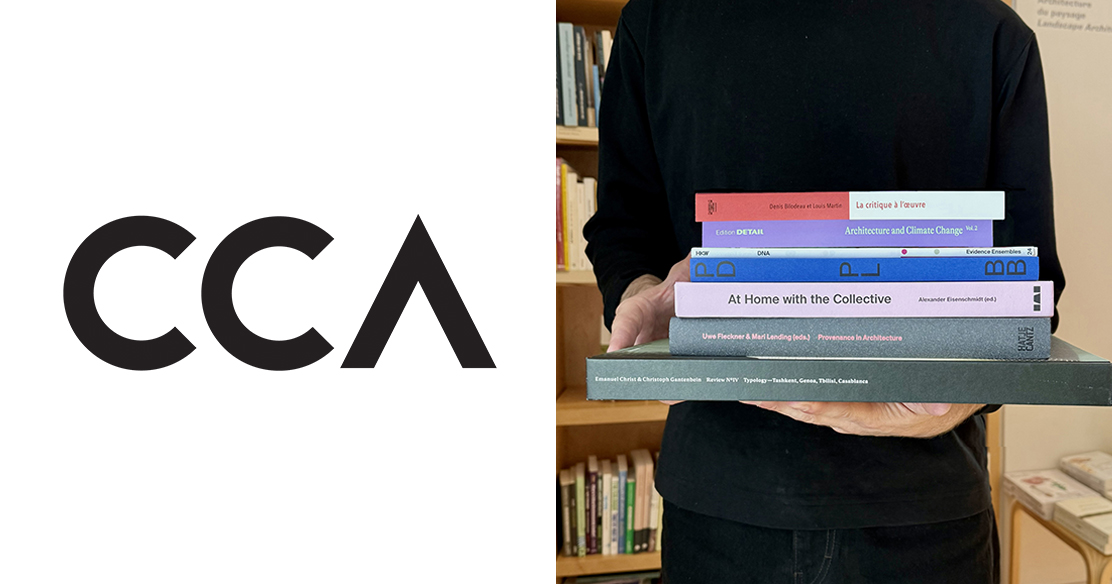
De la part de la librairie du Centre Canadien d’Architecture :
« Quelles sont les sources d’inspiration des formes architecturales? Quels types de structures composent une ville? Pouvons-nous concevoir des villes, des bâtiments et des espaces de vie de manière à nous rapprocher de l’objectif de décarbonisation?
Ce mois-ci, notre sélection de livres aborde les crises environnementales auxquelles est confrontée la pratique architecturale.
Visitez la Librairie ou commandez-les en ligne via le lien suivant : https://cca-bookstore.com/fr/collections/monthly-feature
Architecture and climate change, Vol.2.
DETAIL, 2026
Architecture and construction are at a turning point. The global rise in temperature can only be reduced if construction undergoes radical change. The second volume of the book ‘Architecture and Climate Change’ gives 20 architects and urbanists a chance to have their say on the future of construction.
La critique à l’oeuvre : Fragments d’un discours architectural
Éditions de la Villette, 2025
La critique réagit-elle aux crises ou les suscite-t-elle ? Les crises internes qui traversent régulièrement la critique coïncident-elles avec celles qui affectent l’architecture, ses institutions et, plus largement, la société ? La critique a-t-elle pour finalité d’agir à l’intérieur des frontières disciplinaires de l’architecture ou, au contraire, de faire oeuvre de médiation envers les mondes qu’elle est censée transformer ? Ces questions récurrentes, qui ont accompagné les développements de l’architecture moderne et postmoderne, ont désormais une longue histoire que le présent recueil contribue à éclairer.
Post-démolition, l’architecture face aux ruines
Building Books, 2025
Le changement climatique impose à lui seul une conception entièrement renouvelée du bâti ; l’élévation du niveau de la mer et l’augmentation des catastrophes naturelles exigent de repenser la position et l’organisation des établissements humains ; les limites planétaires appellent une réorganisation profonde du territoire et du construit. Il ne suffit donc pas de substituer la transformation à la construction ; il nous revient également d’aborder les questions techniques et théoriques que pose aujourd’hui la réparation d’un héritage chargé – en quantité comme en désordre – avec lequel nous sommes désormais contraints de nous arranger.
At home with the collective: A report from the future of housing
Birkhaüser, 2026
The housing shortage is a global problem that cannot be resolved through market-driven models of home ownership. This book, therefore, postulates a radical shift from house to housing and from the individual to the collective. The reintroduction of the term « collective » is here understood as a mechanism to refocus housing as a community-building, solidarity-building, and city-building activity.
DNA #24: Evidence Ensembles
Spector Books, 2024
Tracing the transition from the Holocene to the Anthropocene through a geological analysis of deep time on earth. his book examines ways in which the physical archives of the Anthropocene can be made legible.
Provenance in Architecture: A dictionary of terms
Hatje Cantz, 2026
Supposedly immobile, architecture embodies numerous provenance phenomena: architectures of all kinds move through history in spatial, temporal or virtual ways. In Provenance in Architecture, these phenomena are for the first time examined across 100 distinct concepts: from actual physical translocations to temporal change; from authorship, attribution and adaption to the migration of buildings and their components; from construction and material changes to expropriation and transformation; and from decay, dereliction and demolition to the afterlife of architecture.
Typology: Tashkent, Genoa, Tbilisi, Casablanca
Review no. IV. Park Books, 2026
This volume documents some two hundred largely unpublished buildings in Tashkent, Genoa, Tbilisi, and Casablanca. These cities experienced rapid development during the twentieth century, each offering its unique response to Modernism. Rather than merely providing a historical survey, this book uncovers the underlying logic of these cities’ urban fabric through an examination of their built heritage. »